Wall Pieces · Offcuts & tile

Assemble a Weather-Aware Wall Piece

Small, light and well fixed: a wall composition that survives the seasons and your tenancy agreement.

Project · Offcut mosaic panel

Timber-Offcut Sunrise Panel

Backing
12 mm exterior ply
Size
60 × 40 cm
Pieces
25–40 offcuts
Tools
Hand saw, exterior glue, 25 mm screws
Time
Weekend
Target weight
Under 5 kg
  1. Sort offcuts into three piles: sound and dry, painted (unknown age), and doubtful. Only the first pile goes on this panel.
  2. Lay the pieces out on the floor on a 60 × 40 cm sheet of paper and arrange the composition before cutting anything.
  3. Cut pieces to length with a hand saw; sand ends lightly by hand outdoors with a mask on.
  4. Seal the plywood backing on all faces and edges with exterior paint or oil and let it dry.

Sort Your Pieces by Provenance and Condition

A wall piece is only as durable as its weakest scrap. Before thinking about colour or pattern, find out where each piece came from. Kitchen-refit offcuts and leftover decking are usually straightforward. Pallet slats are cheap and charming; check for the IPPC "HT" stamp and reject anything marked "MB" or stained with oil. Old floorboards and skirting from older homes may carry layers of paint containing lead — in the UK, lead paint was common in homes built before the 1960s. If you are unsure, use a lead test kit and never dry-sand, scrape heavily or burn suspicious paint.

Driftwood looks perfect on a balcony, but it carries salt that keeps drawing moisture. Rinse it in fresh water several times and dry it for weeks. Check local rules before collecting: some beaches and protected coastlines prohibit removing material.

Broken ceramic tile offers a different path. Antoni Gaudí's trencadís mosaics at Park Güell in Barcelona turned shattered tile into celebrated surfaces; a balcony version only needs a small exterior-grade board, tile adhesive and frost-resistant grout. Sharp shard edges must be fully embedded so nothing can catch a hand.

Design for Rain, Not Just Looks

Indoor collage techniques fail quickly outside. Paper, card and interior glue will lift in the first wet week. Keep to materials that can get wet and dry again: timber sealed on every face, metal with primer, glazed ceramic and stone. Leave small gaps or a slight slope on horizontal ledges in the design so water runs off. Mount the panel with a thin spacer between it and the wall so air circulates behind it and the wall surface itself does not stay damp.

Think about the sun as well. On south-facing walls, dark painted timber heats and moves more, opening joints. Lighter tones and oiled natural timber cope better. Fading is part of the story — plan for it rather than fight it.

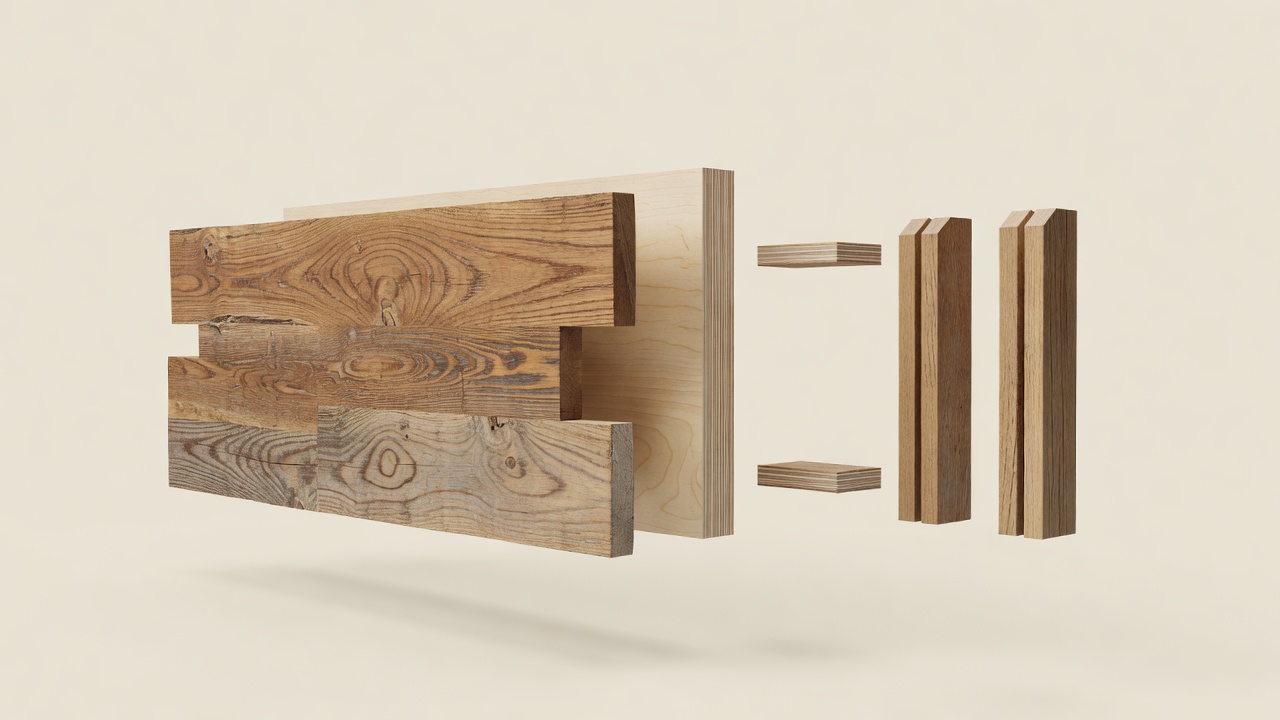
Exploded View: Panel and Cleat

  1. Offcut face pieces — glued, 2–3 mm drainage gaps
  2. 12 mm exterior ply backing — sealed all faces
  3. Rear screws — into pieces over 15 cm
  4. Panel cleat — 45° bevel facing down and in
  5. Wall cleat — 45° bevel facing up and out
  6. Spacer strip — lower edge, keeps panel plumb and ventilated

Hanging It Securely

A split-batten cleat spreads load and lets you lift the panel off for maintenance. It still has to be fixed to something solid with fixings suited to that wall. That is where balcony walls get complicated: many external walls carry cladding, insulation or waterproof membranes, and drilling through them can cause damage, void warranties or breach your lease. Since the Grenfell Tower fire, many UK buildings also have specific rules about combustible items on balconies and façades.

Lightweight décor vs structural questions. A panel under about 5 kg that leans on a shelf, hangs from an existing approved hook, or stands on the floor against a wall is lightweight décor. Drilling into an external wall, cladding or balcony soffit, or hanging anything heavy, needs written permission from your landlord or building manager and, if in doubt, a qualified installer. Adhesive hooks are not reliable outdoors.

Renters have a gentle alternative: mount the finished piece on a freestanding easel-style frame or a weighted planter base, so it sits against the wall without touching it.

Upkeep

Twice a year, lift the panel off its cleat, look at the back for damp patches, check every piece is still bonded and re-oil exposed timber. Replace any piece that has split rather than gluing it back — a split piece holds water.

Finishing check before hanging
  • All faces and edges of the backing sealed
  • No loose pieces after a firm shake over a soft surface
  • Weight recorded and fixing chosen for that weight
  • Permission confirmed for any wall drilling